

Lesson 1: ア イ ウ エ オ
Reading
How to Read
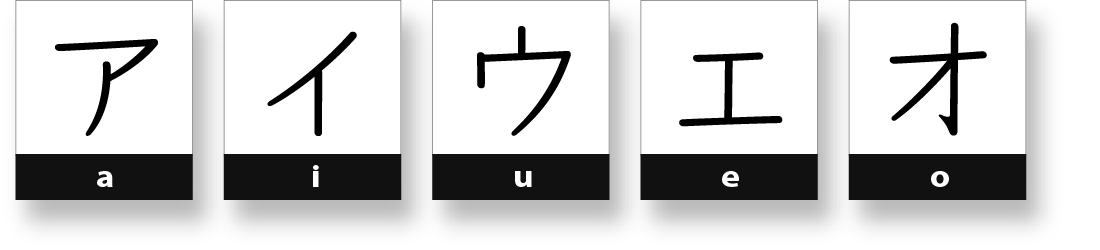

Just watch the video several times and move on. You can memorize at the Quiz programs.
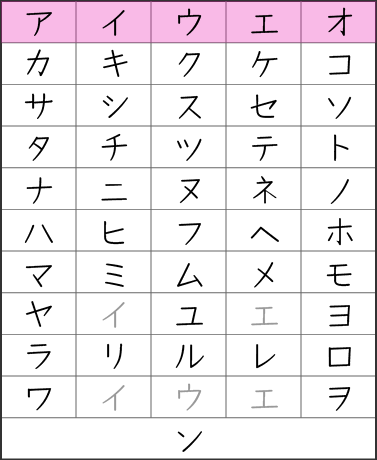
Structure of 五十音図 [ gojūon-zu | Table of 50 sounds ] is exactly the same as Hiragana.
Long Vowels
| アー | イー | ウー | エー | オー |
| ā | ī | ū | ē | ō |
Long vowels are indicated by an additional horizontal bar "ー".
In Rōmaji, long vowels are indicated by a horizontal bar on top.
Additional Letters
The following additional letters are used to describe the sounds of foreign languages.
ァィゥェォ [small a i u e o]
| イェ | ウィ | ウェ | ウォ |
| ye | wi | we | wo |
These small letters always added after some letter and cannot be used just by themselves.
ヴ [vu]
| ヴァ | ヴィ | ヴ | ヴェ | ヴォ |
| va | vi | vu | ve | vo |
Letter ヴ is used for "v" sound.
Since there is no "v" sound in the Japanese language, it is usually pronounced "b".
Quiz
Quiz A+B is a reading practice of Katakana letters and words.
Content of Quiz C is the same as Quiz A+B (different order) and the pace is faster.
How to Do
- Katakana will be shown.
- Read out the letter when it becomes red color.
- Repeat till you can read most letters correctly.
This program is a video file. There is no function to check your answer.
Click "YouTube" button below to subscribe our official channel. You can get information on new uploads.
Go to the Writing section.

References
Related Topics
YouTube
japanese-lesson.com official channel